


Looking for good areas to fish in an estuary can be daunting to the beginner. Where to start?
Arriving at a new estuary is always exciting, and it often takes a day or two to figure it out.The first thing you need to establish is where the deeper channels run and where the shallow banks are. If the water is clear then this is easy. The deep water appears darker and the shallower water appears lighter. Using polarised sunglasses greatly improves your vision of underwater structure. If the water is discoloured then it can be a bit trickier. The shallower water generally flows slower (due to friction), while faster water indicates deeper channels.
Check out the formations at low tide. Find places where shallow water drops away quickly to deeper water. These are called drop offs. Always keep an eye out for movement of baitfish and swimming prawn. They usually give their presence away by surface movement, particularly early in the morning and in the evenings. Anywhere where bait organisms are plentiful should be a good area for predators, unless the bait fish are in very shallow water. In that case predators will be patrolling in the nearest deep water to where the bait is. On a dropping tide establish where the water is flowing off the shallows into deep water. Game fish will ambush bait at these channelling points.
Structure in estuaries often holds fish. Look out for rocks, sunken trees, dropoffs etc.
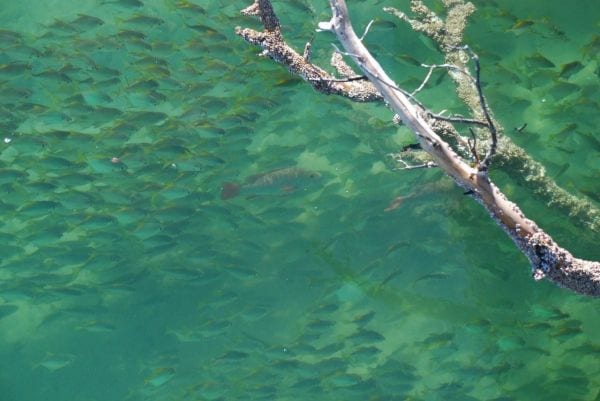
If you cannot see any visible structure in the river, such as boulders or logs, then an eddy on the surface can indicates underwater structure. Fish both up current and down current of structure. Fish around the mouths of creeks flowing into the main river, there are often holes scoured out here by current eddies that can hold fish.
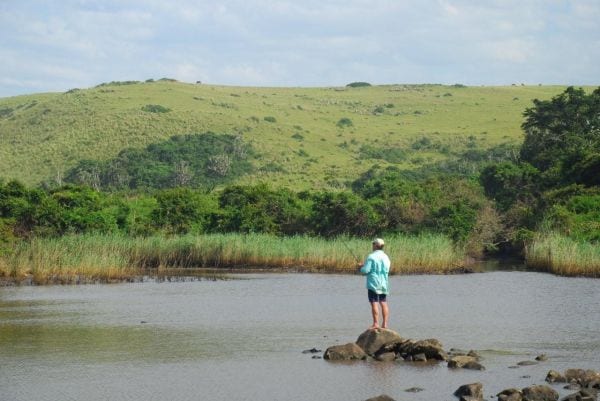
Weed lines can be excellent for targeting predators that hunt along their edges, or hang under their shadows. Fish the areas where there is visible current on the edges.
Current lines are also important to keep an eye out for. Often with the changing tide, current lines form in places, which become a hunting area for predators. When a good current line forms in an area with deep enough water, it is worth exploring.
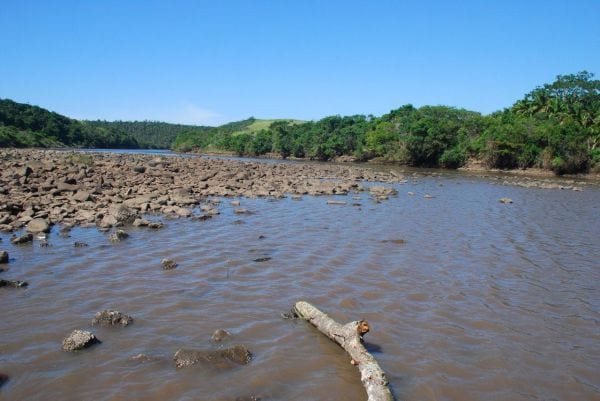
Rocky areas are particularly good in the upper reaches of estuary, and often hold river snapper and perch. Sometimes these rocks may be exposed at low tide and covered at high tide, and often fish best on a half tide. Look carefully at the rocks, if there is sign of growth such as sun oysters, tube worm, or barnacles on them, then they will be good for fishing over when the tide covers them.
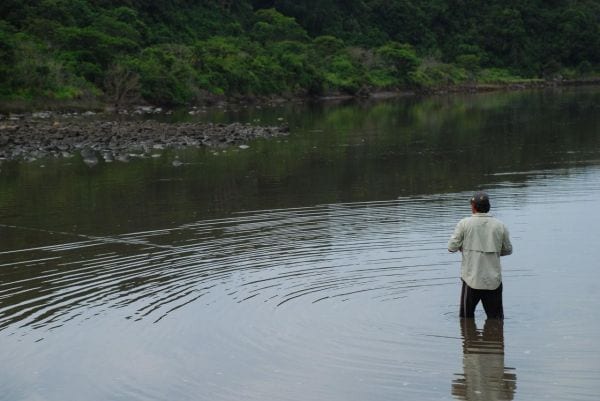
The water below cliffs and rock ledges is often deep and is a great area to target predatory fish. These are particularly productive in the upper reaches of estuaries where resident species such as river snapper and perch will spend the daylight hours. I like to fish these on a dropping tide, while there is current flowing.
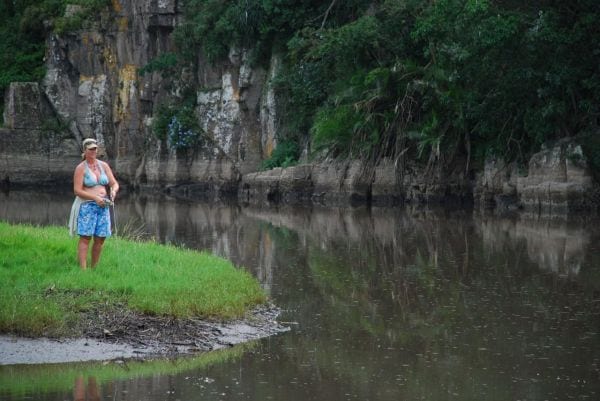
Watch the water for signs of fish movement, some species such as skipjack and garrick will often give their presence away by breaking surface. Baitfish being chased is a sign of predator action. Take note of where this happens. If a predator is feeding in a certain spot, then that spot is worth fishing, other predators will probably soon be arriving.
Moving into an estuary with the rising tide is a good option. A good idea is to follow the line of clean water and dirty water as it pushes up the river. This can often be productive with fish entering an estuary on the pushing tide. Fish the mouth area on the low tide and work your way upriver as the tide pushes.
At high tide you want to be fishing the upper reaches of the river. Follow the falling tide back down, until you are once again fishing the mouth area on a low tide. Bends in a river create interesting fishing opportunities, with the inside of a bend being shallower and the outside (cut-away bank) being deeper with faster moving water. The cut-away bank often has submerged trees and rocks that have fallen into the water as the bank has been broken away, creating ideal structure for fish. The bank is also often undercut, providing an excellent ambush position for some predators.

On the low tide also look out for good mudprawn banks. Where there is a lot of mudprawn there will always be a lot of fish. These creatures are an important food source and a very important part in the food chain in estuaries. It is a good idea to concentrate fishing efforts over and around productive mudprawn banks, particularly on a pushing tide as the water covering the prawn colonies gets deep enough for fish to move in.
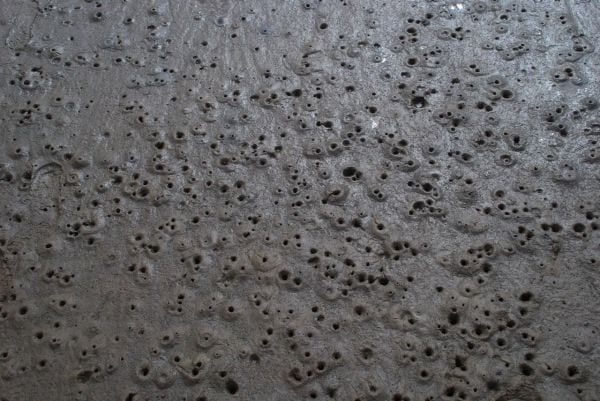
You will be able to see blow holes, where fish such as grunter have been blowing prawns out of their burrows, this confirms that this is a prawn bank where the grunter like to feed.

Do not be put off by dirty water in the upper reaches of an estuary. Often after rain, the fresh water entering the system is quite muddy. Fresh water is less dense than salt water, and there will be a layer of clean salt water beneath the muddy fresh water. This often provides great conditions for catching fish, as they feel less exposed beneath the muddy water, and also makes it easier to stalk the fish as they do not see you. In the pic below note how dirty the water appears, yet we caught a lot of fish in it.

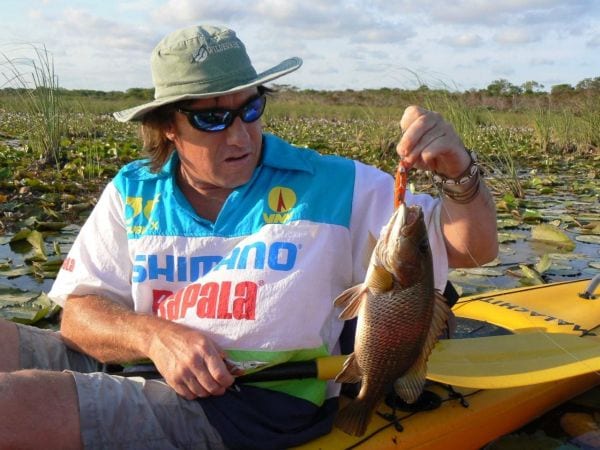
Some species, particularly river snapper, perch and ox-eye tarpon are tolerant of completely fresh water and will go beyond the tidal influence in an estuary. The pic below shows a river snapper caught amongst water lilies in totally fresh water in the far upper reaches of a Mozambique estuary, around 40km upriver from the river mouth!
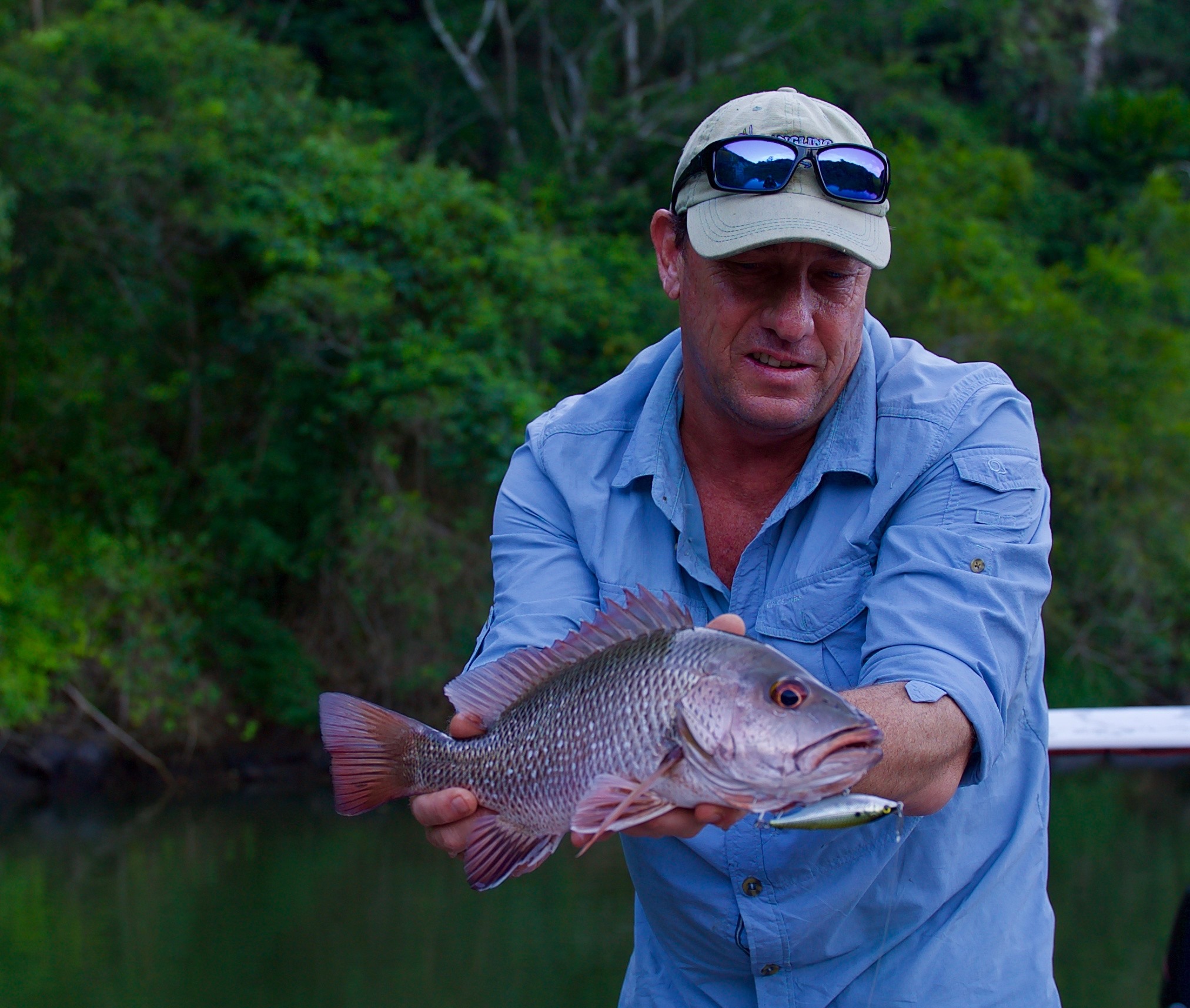
When doing a reconnaissance trip up an estuary it is a good idea to focus a lot of your casting with surface lures in particular. Small poppers or stickbaits. When these are twitched slowly with plenty of pauses in between they attract a lot of interest from predators. Cast to structure and close to the banks as though bass fishing. Even if you do not hook up on fish, you will get enquiries in the form of a soft swirl or boil on the lure. This gives you confidence that you are fishing the right areas. I like to have a second rod, rigged with a suspending lure, or a soft plastic, that I can make a quick follow up cast at any fish that moved on my surface lure. This very often results in a catch.
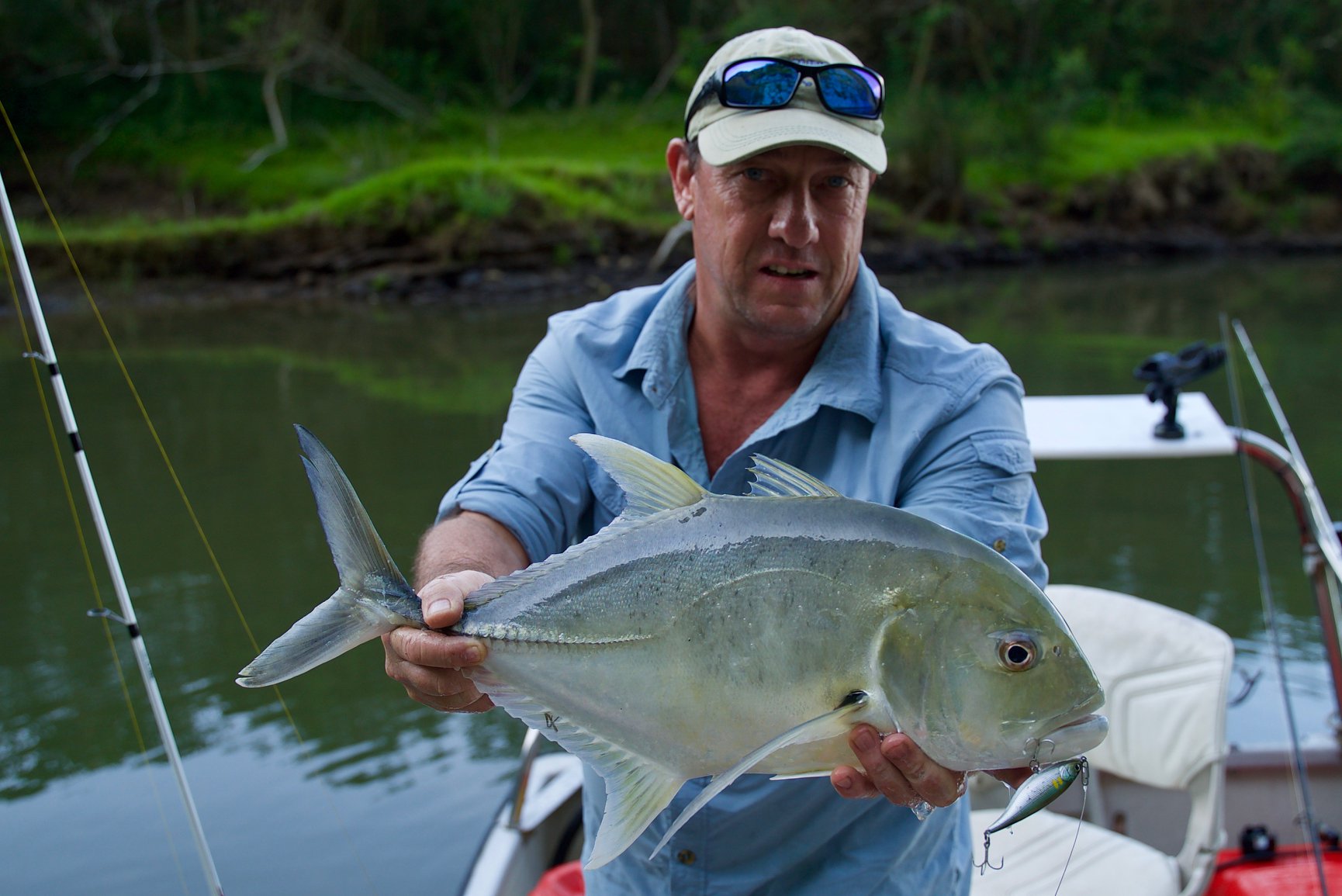
Most predatory species in an estuary will eat a well presented surface lure in the right conditions. This form of fishing is particularly effective at dawn and dusk, but can account for fish throughout the day.
Sebile Stick Shadd
I still feel better when I have worked all of the good looking water water with both surface and sub-surface lures and hopped jigs through the holes and channels. When you are packing up at the end of the session it is good to feel that if the fish are there, you had a decent shot at them.

- Maldives Trigger - April 28, 2022
- Matoya Humpback – Figuring it out - December 15, 2021
- Mixing It Up - November 24, 2021