


I was staying at The Spotted Grunter Resort in Port St Johns a couple of weeks ago. The owner, Vernon Malyon, suggested that I might like to visit their nearby Ntafufu Eco Beach Camp. I had heard a bit about Ntafufu, but had never fished that estuary, so I was very keen to give it a bash.
The camp is about 25kms north of Port St Johns (by road) and takes about 45 minutes to get there by 4×4. While it may be just possible for a two-wheel drive vehicle to make the journey, I wouldn’t recommend it.
The camp is a fairly basic setup consisting of 12 tents on stilted decks, each with its own en-suite bathroom. There is a communal kitchen/dining area and a nice braai place in the centre. It is close to the river and overlooks an expanse of beach and river mouth. It is off the grid, with gas geysers, solar power and rainwater in jo-jo tanks. It is the perfect place for a small group of fishermen and their wives or families to come on an affordable, self-catering holiday. The camp is partly owned by the local community and every time there is enough money in the account, the community trust buys a new jo-jo tank for one of the locals.
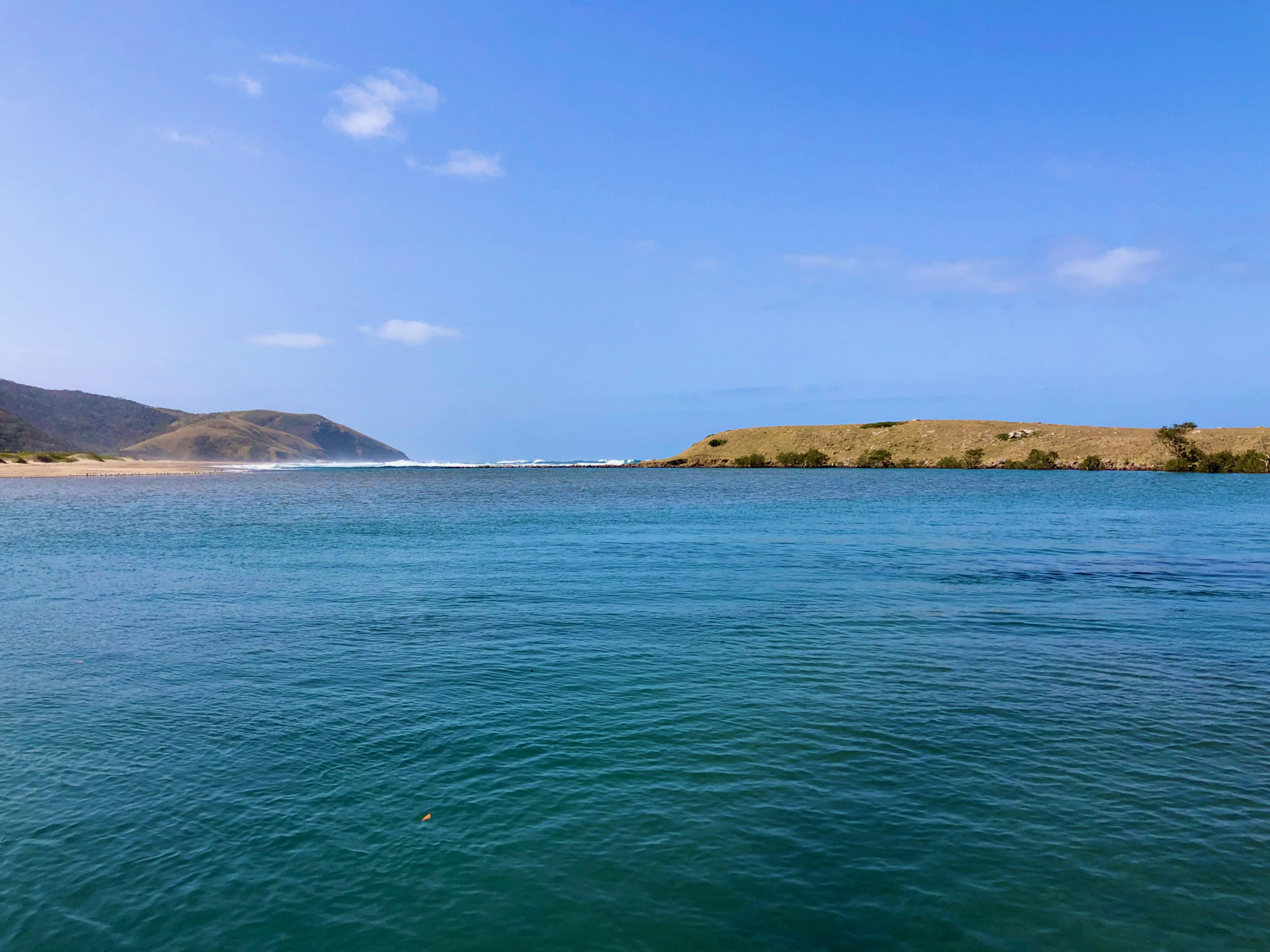
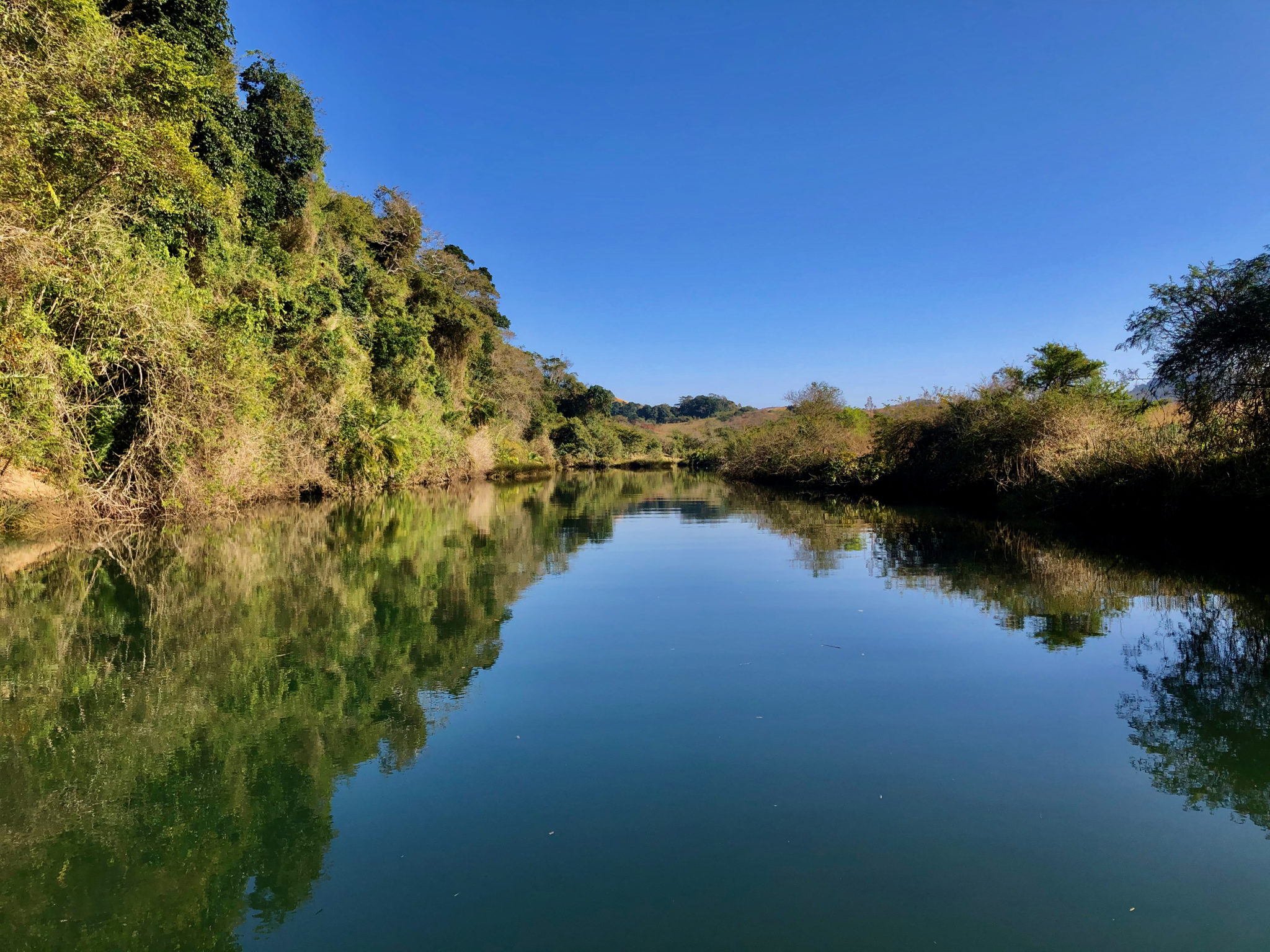
The river is a typical, beautiful little Transkei estuary. It has mangroves lining the banks in some areas and winds through the forested hills of the coastline. There are plenty of lovely sheltered spots, protected from the wind, where one can fish on even the blusteriest day.
There is lots of food in the river, from mudprawn and swimming prawn to crabs, mullet and plentiful shoals of small baitfish. The river water was crystal clean and reasonably warm for August conditions. I was impressed to find a number of deep holes in the river, some over 8m deep, which is pretty good for a small system like that.
Being winter there was little surface activity, so I spent most of my time flicking lures that work well beneath the surface. I concentrated mainly on using jigs rigged with soft plastics, bucktails and some sinking and suspending stickbaits.
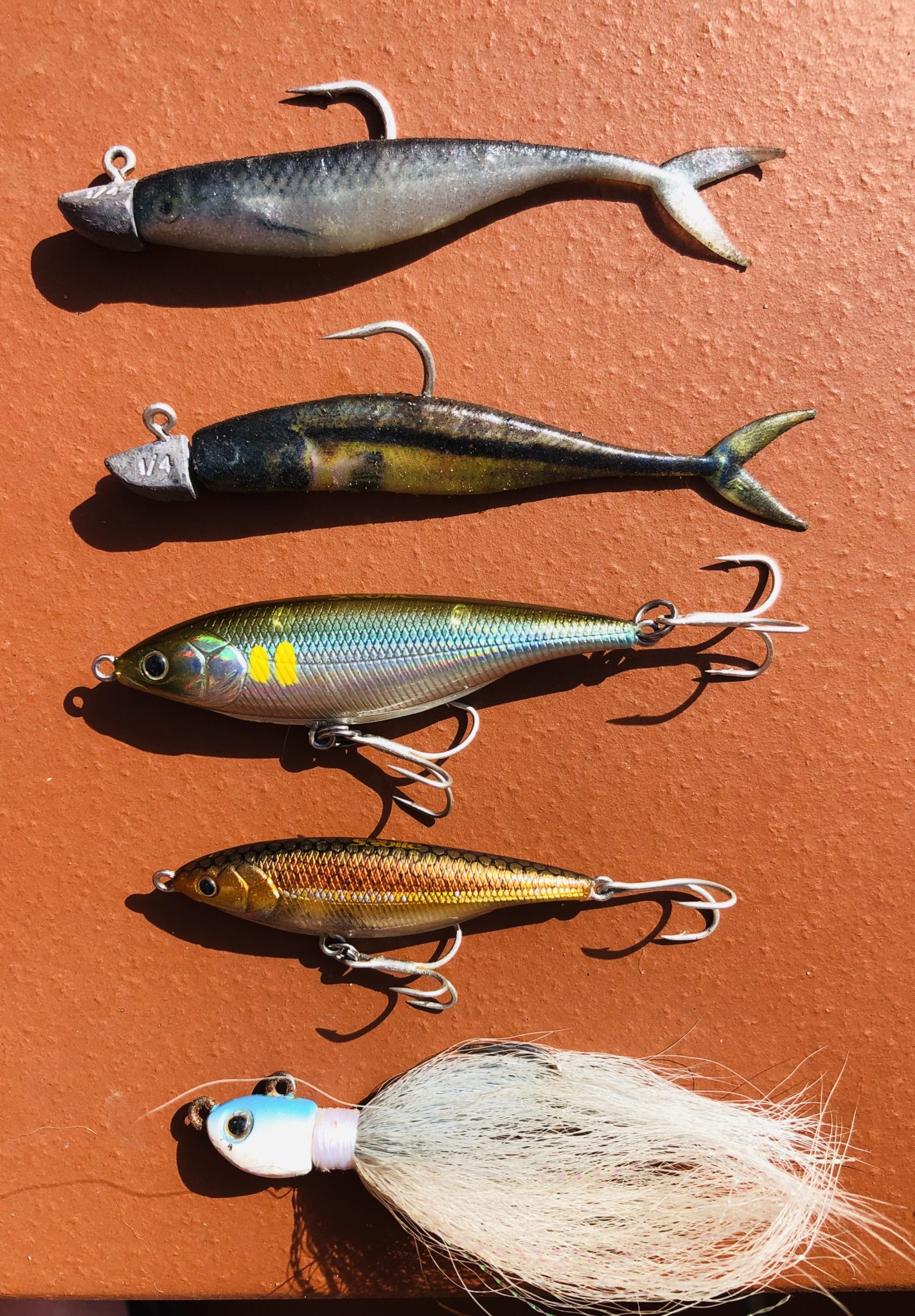
I had some of the new Berkley Powerbait ‘The Champ’ Minnows in 3.4 inch, which I rigged on ¼ oz and 3/8 oz jig heads. These plastics have realistic finishes and I felt confident fishing them slowly in such clean water. I felt that they would pass close inspection by even the fussiest fish. Those and the Sebile Stick Shadds in 6cm, 7.2cm and 9cm in both sinking and suspending were pretty much what did the damage on this trip.
Over the course of a few days I had a fantastic time sneaking around the quiet spots of the Ntafufu on my little river boat, probing every likely looking spot for some estuarine predators.
I was rewarded with some smallish kob on the soft plastics, working them slowly and bouncing them along the bottom in some of the deeper channels and holes. While they weren’t big fish, they gave me some enjoyment, and I am certain that some decent specimens must be around in that river.
Something else that I enjoyed was catching a few immature GT’s. These aggressive predators hit soft plastics and stickbaits, mainly in some of the deeper pools right in the upper reaches of the river.
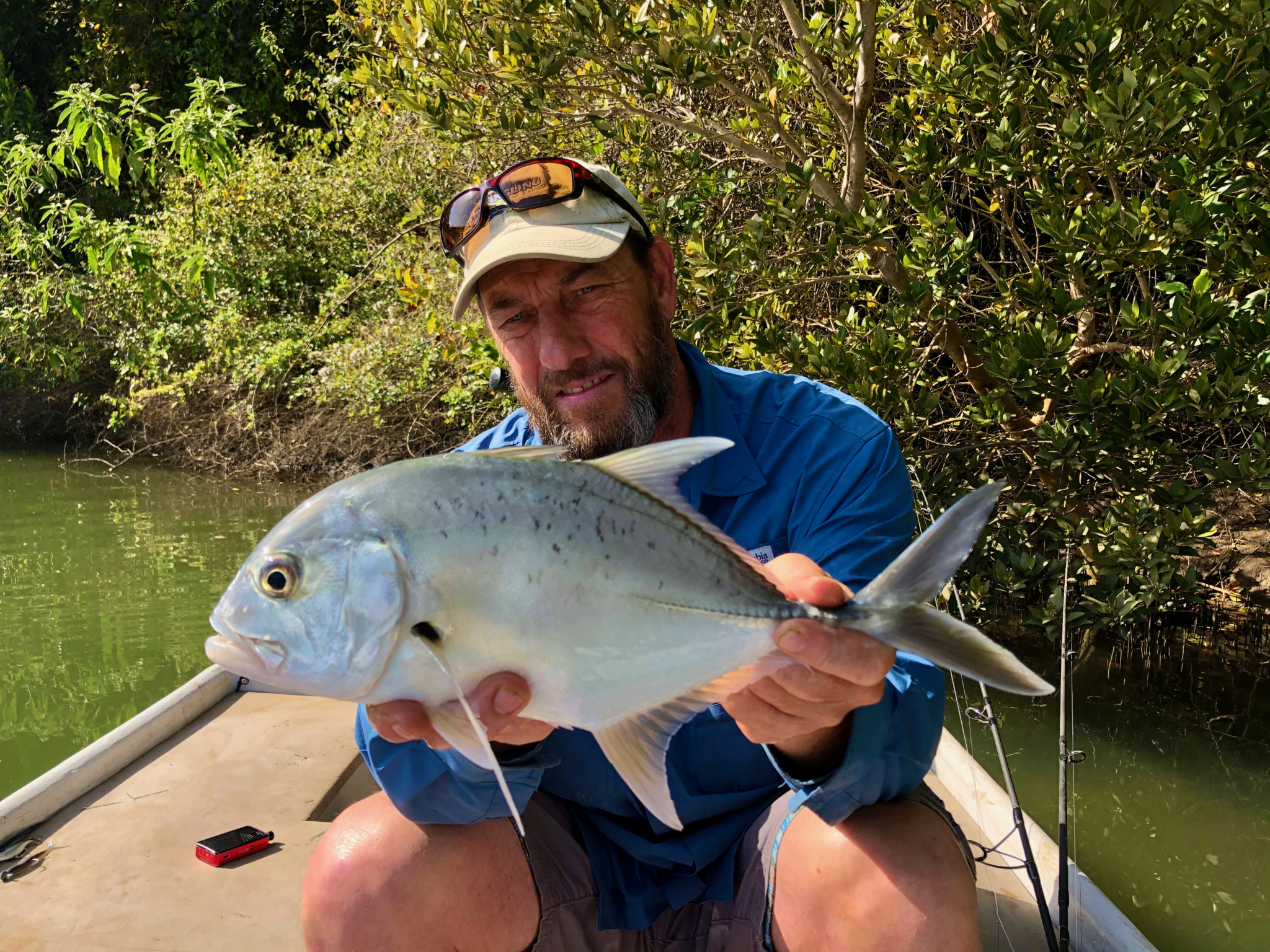
They always fight well above their weight and I was surprised a few times that the fish weren’t bigger, after the hard fight that they put up.
My highlight of the trip though, were the river bream. I caught a few decent specimens on both soft plastics and on the Stick Shadds. The Ntafufu river has some solid river bream in it, and I am sure that there must be good stocks of river snapper there too. It was a bit cool for the snapper to bite, but I would like to go and try again in the summer months, when they are much more active.
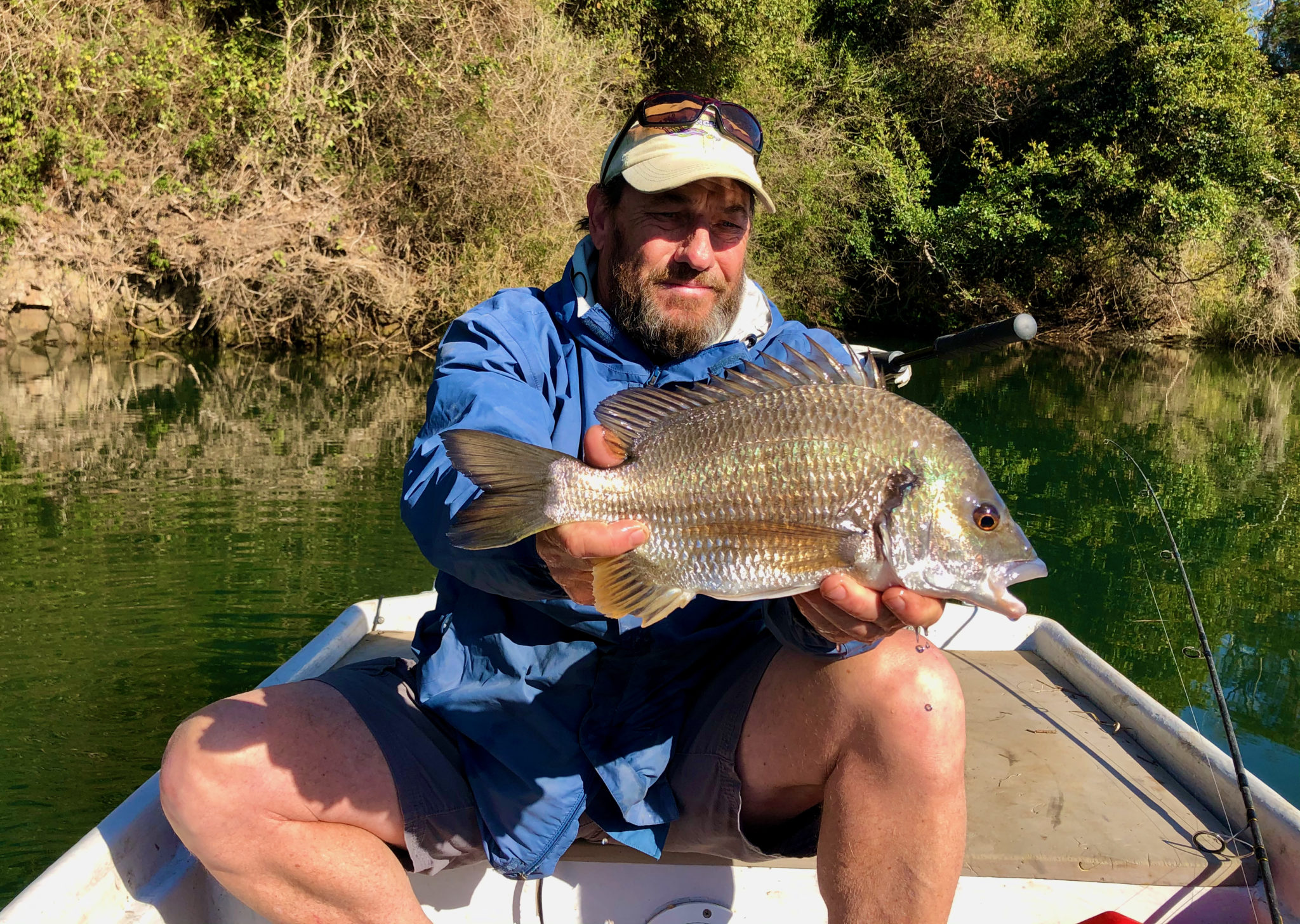
I saw lots of river bream slipping away off the shallow rocky banks, where they had been enjoying the sun warmed water, as we sneaked past slowly and quietly using my electric trolling motor. There were many of them and the clear water made it easy to see them.
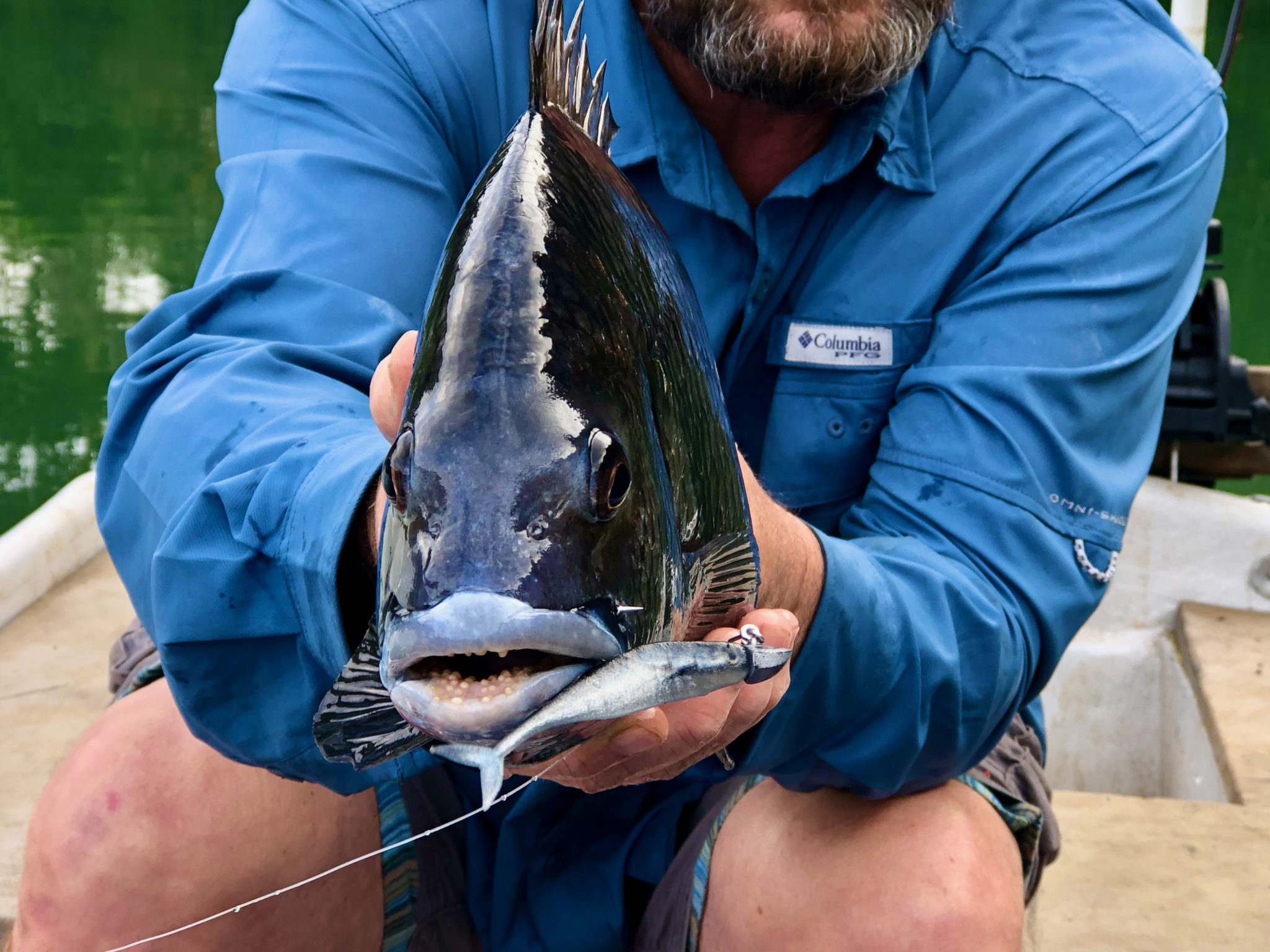
Most of the river bream that I caught were the standard silver colour that I am used to, but one morning I got a surprise. I landed a good-sized fish, which was almost pitch black and seemed to also have a slightly different shape to the others. I was under the impression that we only have one species of river bream in our waters, as that is what all the books say, so I put it down to a colour morph, or the fish being dark due to living in a dark place.
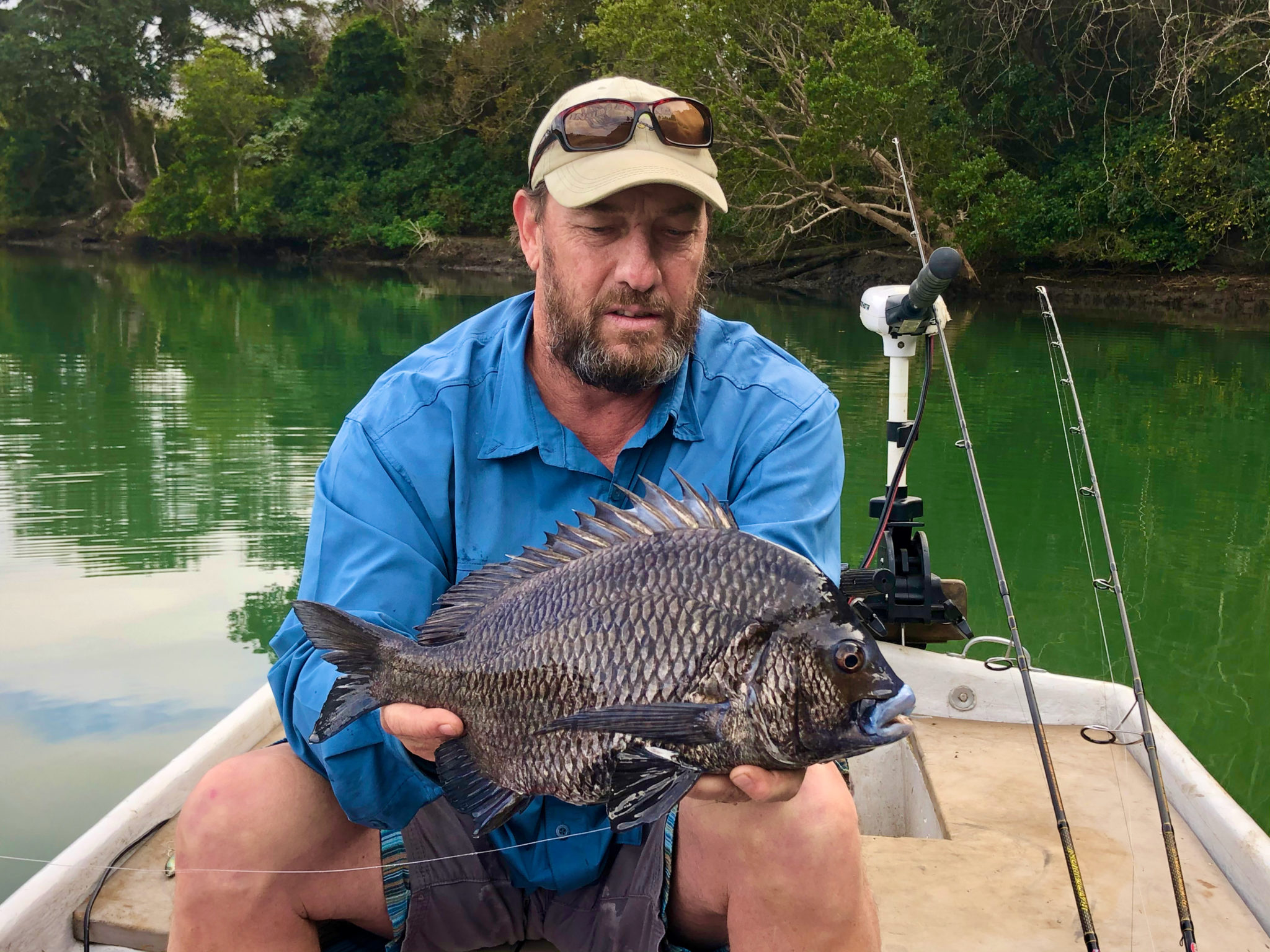
Only when I sent a pic of the fish to Dr Paul Cowley, did it come to light that this was indeed a different species. Paul told me that the common, silver coloured river bream that we catch is Acanthopagrus vagrus. The black one is far less common and is in fact Acanthopagrus berda. I was very pleased to have caught another species and to have learnt something new.
The Ntafufu was an absolute pleasure to fish. It is very scenic and there was plenty of fauna, flora and birds to keep a keen naturalist like me occupied while waiting for the next bite. Travelling around silently with the sneaker motor definitely increased our sightings of various creatures, including leguaans, sea turtles, a white backed night heron, a number of shy African finfoot and a host of other great birds.
I am definitely going to go back during the warmer months and see what species I can catch during a different season. I am certain that there must be plenty of decent river snapper in the river, as well as bigger kob, pick handle barracuda and springer/skipjack.
The Ntafufu Eco Beach Lodge can be booked through the Spotted Grunter resort, as they market and manage it for the local population of that area. They can be contacted at info@spottedgrunter.co.za or on the phone number: 047 564 1279 for more information or bookings.
Please enjoy it, and treat it like the delicate nursery area that it is and release any fish that are caught. They are taking shelter there while they grow to breeding size and are the future of the fishery along our coastline.
- Maldives Trigger - April 28, 2022
- Matoya Humpback – Figuring it out - December 15, 2021
- Mixing It Up - November 24, 2021