


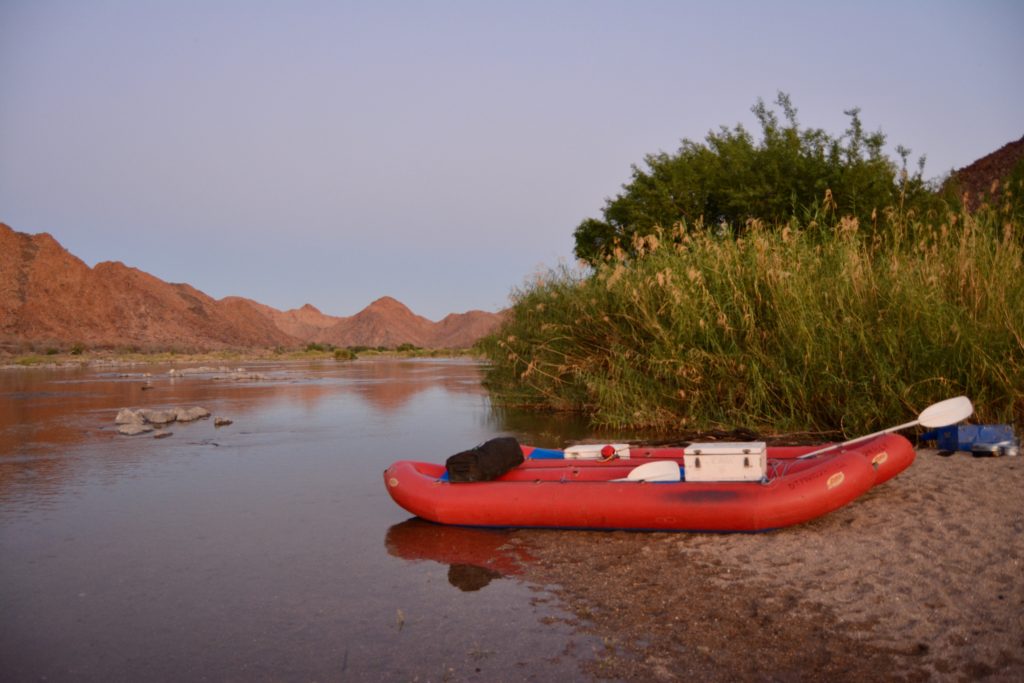
Trip report from our trip on the 12th to the 17th of October 2020, to a section of the orange river below Augrabies falls and above the Richtersveld. I have just got back from the Orange river, where we targeted largemouth and smallmouth yellowfish. The trip was hosted by Kalahari Outventures, on their exclusive section of the river. We travelled down 60km of remote river over a four-day period, camping along the way. We were paddled by guides on drift boats, so all I had to do was focus on the fishing.
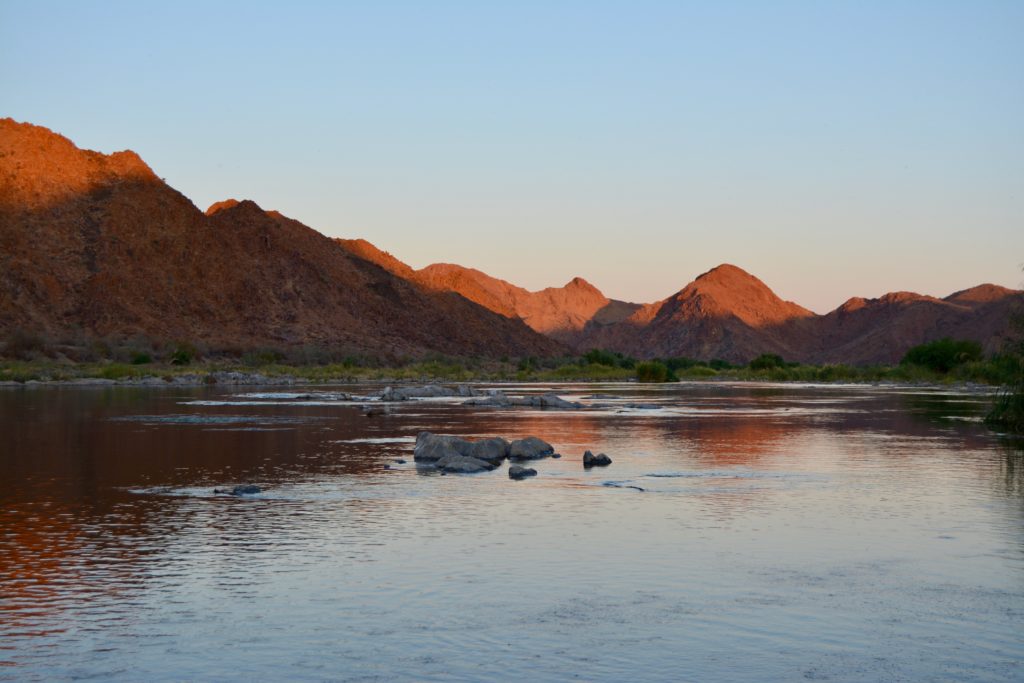
During the winter and spring months the river runs clear. The water on this trip was absolutely crystal and it made the visual aspect of the trip even more spectacular. Standing on the front of the drift boat, I could watch a succession of fish making way for us as we floated through their world. There were thousands of mudfish, plenty of yellows, catfish and tilapia and some spectacular carp, around the water grass and the massive sunken boulders.
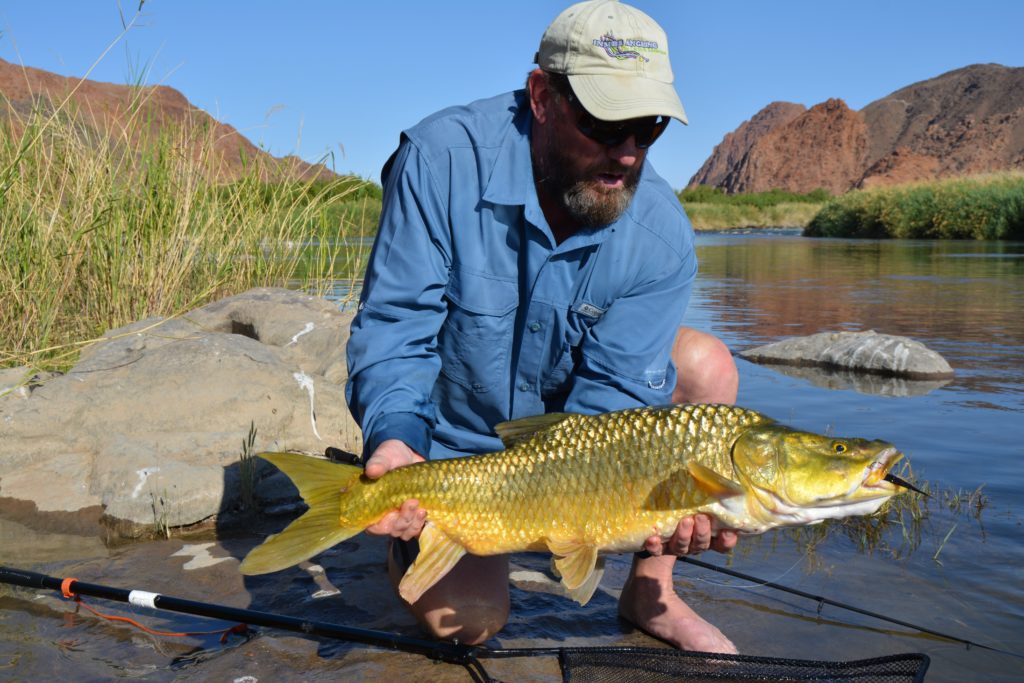
I was guided by James Kirsten of Kalahari Outventures, and the two of us had a great time exploring the river. James’ focus is usually on fly fishing, so it was interesting for him to see some spinning techniques and lures, other than the usual crank baits and spinners.
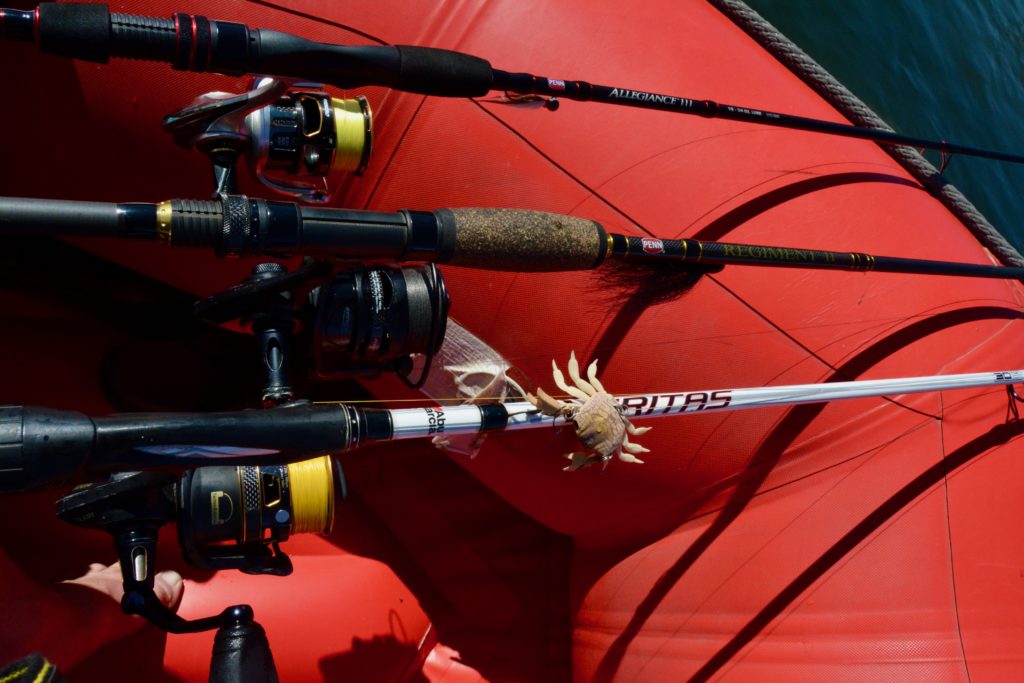
I took three rods on this trip, a light, a medium and a strong setup. It was good to have them loaded and ready to go, close to hand and it helped me get the right lures into the right areas as we drifted by them.
The light setup:
Rod: Penn Allegiance 3, 7” Medium spinning rod.
Reel: Abu Garcia Revo Premier 30
Line: Spiderwire Stealth Smooth braid, 15lb.
Leader: 12lb Berkley Vanish Flourocarbon
Medium Setup:
Rod: Abu Garcia Veritas 7’, 2-piece Medium action.
Reel: Penn Clash 2500
Line: Berkley Whiplash 8, 20lb
Leader: Berkley Vanish 15lb.
Strong setup:
Rod: Penn Regiment 2, 7’ Tiger
Reel: Penn Conflict 4000
Line: Berkley Black Velvet 20lb
Leader: Berkley Vanish 15lb
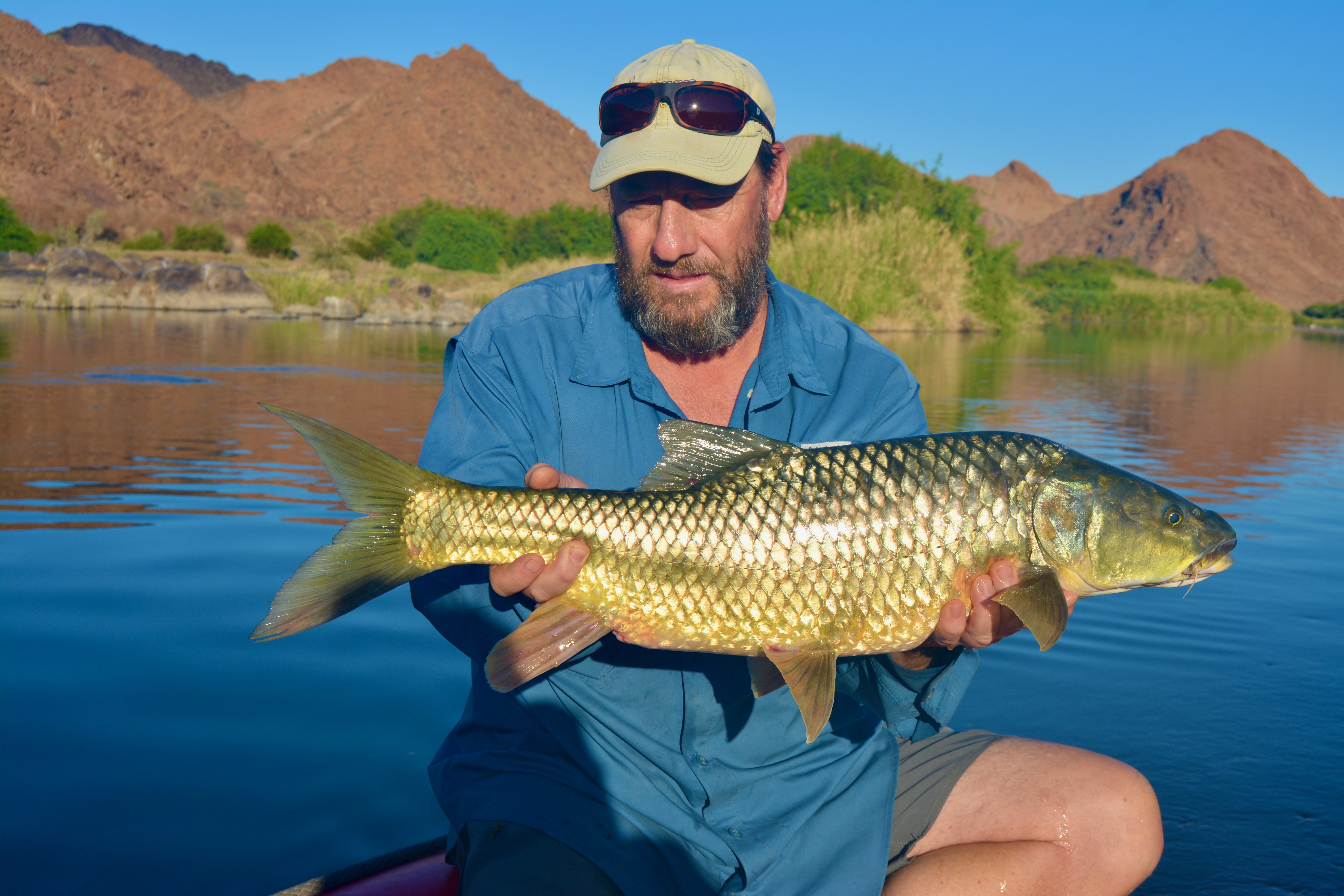
I had a selection of lures to use with all three outfits, each one with its own job, for different depths, current speeds, target species etc.I caught most of my largemouth yellows on a ¼ ounce Berkley Fusion bucktail jig. The two colours that I used, and both worked well, were black, and olive over white. These little bucktails were heavy enough to cast on the medium and strong outfits and had the perfect sink rate to get down in the deeper pools – where the big largies lurk. The hooks are also sharp, strong and have a narrow gape, which is excellent for yellows.
Some of the hits came with the jig still sinking to the bottom. I would cast the jig to the target area, then give the rod tip a quick flick to get more slack, before clicking the bail over. This means that the jig sinks on a slack line, which stops it from swinging, or dragging. The natural sinking action is far more appealing to fish.
While the jig sinks, I keep a sharp eye on the braid lying on the surface and the belly of line between my rod tip and the water. The slightest twitch or straightening of this line is normally a bite and needs a quick flick of the rod tip to set the hook.
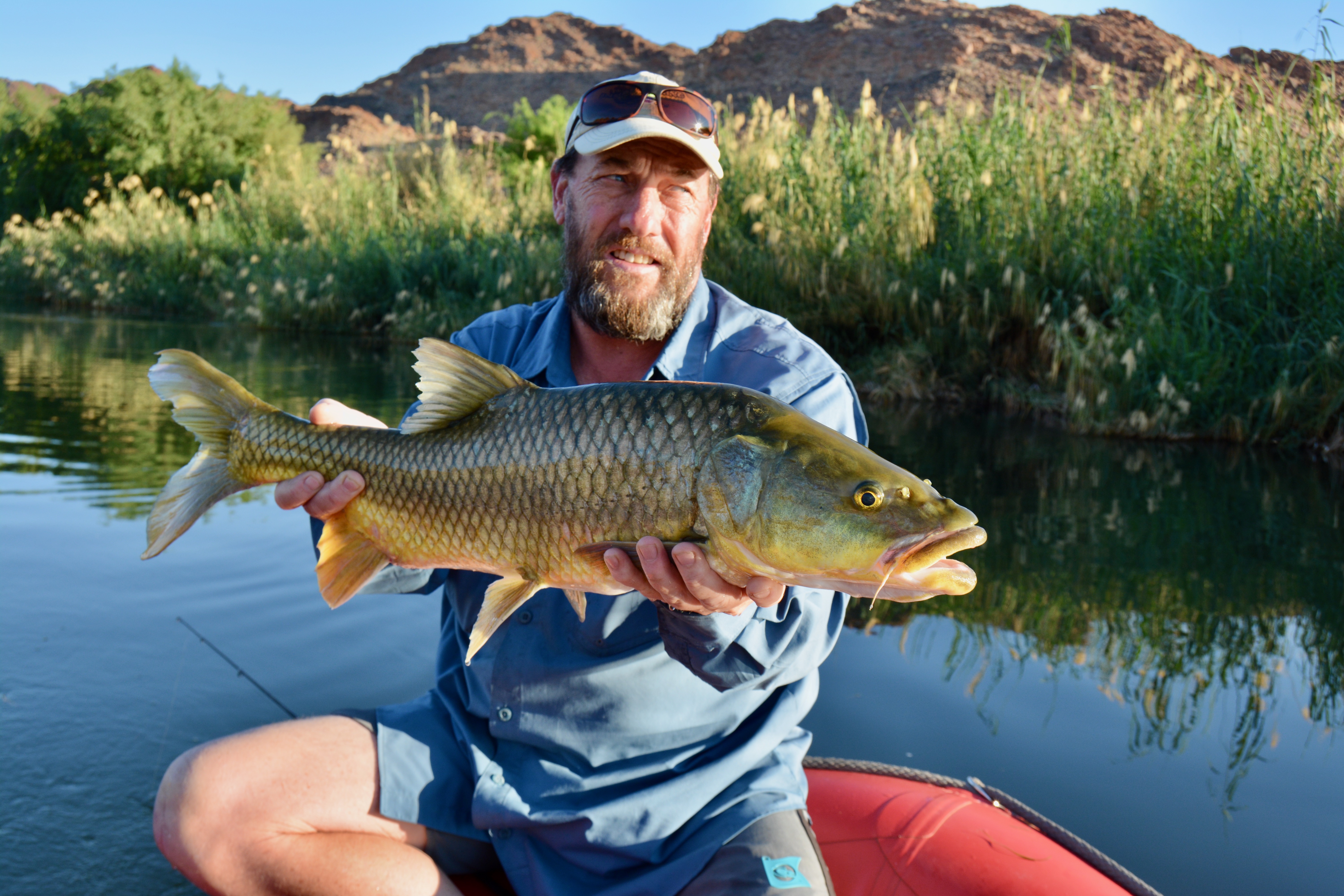
If the lure is not eaten on the drop, then I allow it to hit the bottom and lie for a few seconds, before giving it a twitch, lifting it off the bottom and then allow it to sink again. I do this about three times, then begin to bring the jig back through the midwater column a bit faster, with regular twitches of the rod tip, held low and twitching to the side. The bite could come at any stage and was normally swift and hard. The biggest largie that I landed on the bucktail was a solid trophy of fourteen and a half pounds.
I also caught some largemouth yellows on The Berkley Square Bull 5.5 in perch colour. This crankbait dived to the right depths, with a very enticing wobble and bounced off boulders, attracting vicious strikes.
My bite of the trip though came from a 12lb largie, which smashed a Sebile Stick Shadd 70 suspending. I cast the lure at a nice current seam behind a small reed island. I gave it a few twitches and saw a bow wave heading for the lure and then the fish smashed it, with a spray of white water.
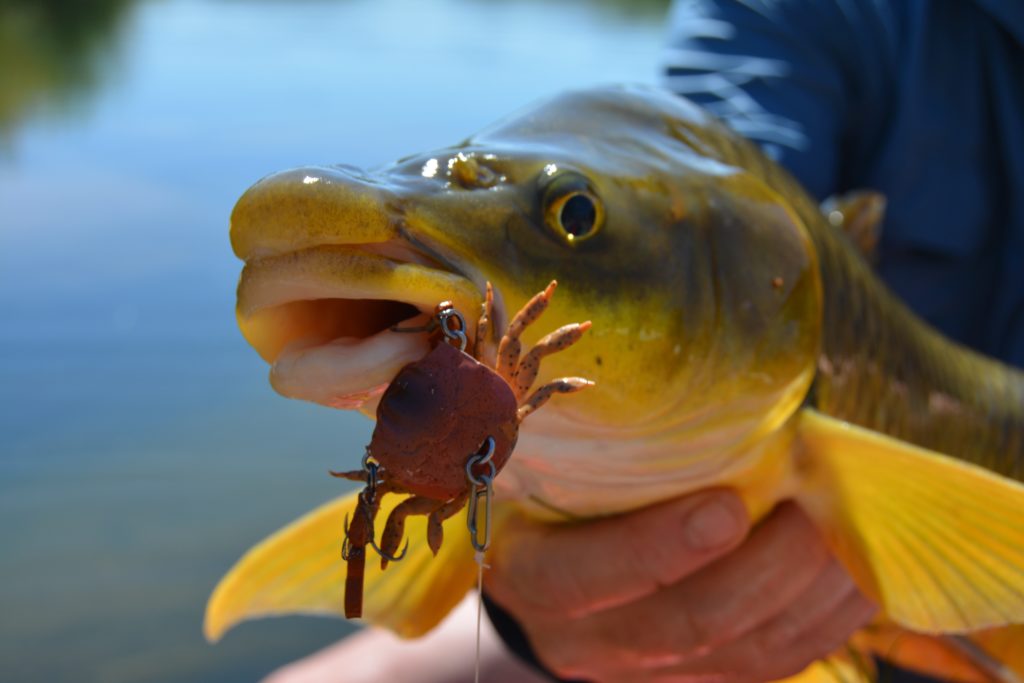
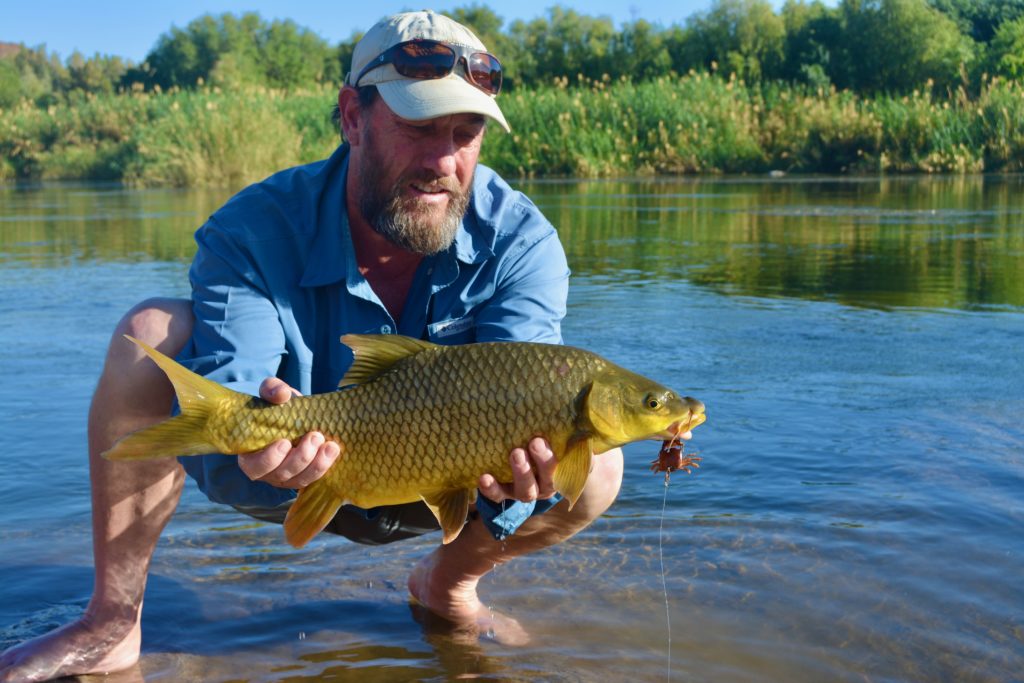
We also caught some solid smallmouth yellows. I got them on bucktails, on small soft plastics and on crankbaits, but the most effective lure by far for the smallmouth, particularly in fast running, shallow water, was the Cranka Crab. This innovative Australian product is perfect for yellowfish, which love eating crabs.
I used the 5.9-gram and 9.5-gram models and found that both were eaten by largemouth and smallmouth yellows. Colour seemed to play little part, and all four colours that I tried were eagerly eaten.
The best way to fish the crabs was to stand below a rapid, or series of shallow pools and cast upstream. Click over the bail arm as the lure lands and immediately begin picking up slack as the lure drifts towards you. You don’t want the line tight, but you do want to be able to see a bite. I try and maintain a bit of a belly of line between my rod tip and the water, which I watch for any sign of a bite.
I used the smaller crabs on my light outfit and was able to get remarkably long casts with the fine, soft braid and the soft rod tip.
All in all, it was an incredible trip. I think I caught in excess of 70 fish over the trip. There was plenty of action and lots of different habitat types to hunt fish in. We fished from the boats at some places but got off and fished from boulders in the river, or from the riverbanks wherever we could. The staff were on the ball, the guiding was world class, the food fantastic and the Orange river was simply spectacular.
- Maldives Trigger - April 28, 2022
- Matoya Humpback – Figuring it out - December 15, 2021
- Mixing It Up - November 24, 2021