


On a recent trip to the Transkei, where we fished some estuaries with light spinning tackle, one of the most rewarding ways of catching fish was on surface lures. I have always got a big kick out of fishing topwater lures. I enjoy being able to see the lure and have the opportunity to give it the most enticing action, and then of course being able to witness the smash, which is often as vicious as it is sudden. Apart from this you also see the subtle boils on the water around the lure from fish that are shy and have come for a look, without hitting the lure. This gives me extra resolve and pushes me to try harder, knowing that there is an interested customer in the area.
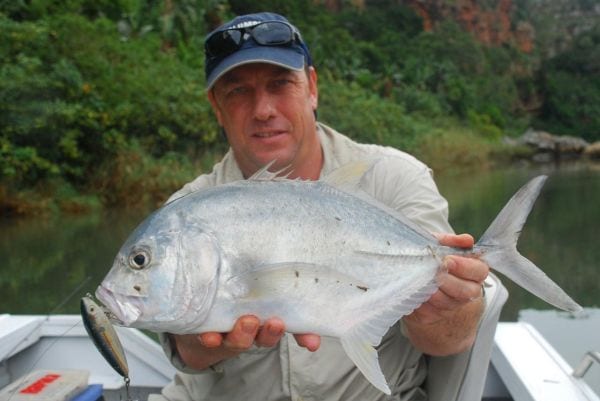
Fishing surface lures in the still, calm waters of an estuary is far more subtle, and requires a lot more finesse than casting poppers in the ocean. A very splashy, fast retrieve will work for some species such as kingfish and Garrick, but a slower more subtle action will attract a whole variety of species and can be hugely rewarding. Garrick and kingfish will also attack these slower moving lures, so it is generally the best all round action, unless some frenetic surface activity is spotted.
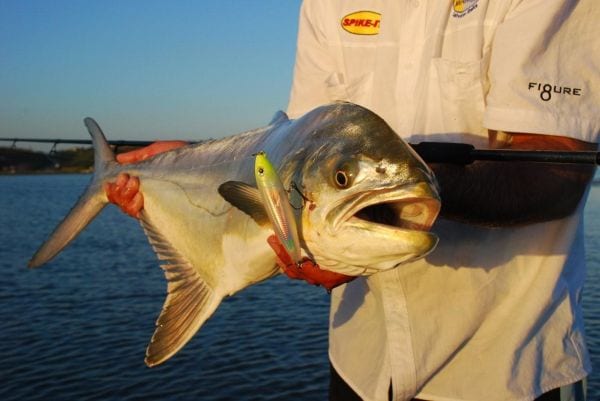
The first thing that is important to bear in mind is that fish move in to very shallow water to feed in tidal estuaries at times. This is especially true at dawn and dusk. The bait organisms such as mullet, crabs and swimming prawns are generally in very shallow water at these times, trying to hide from the predators, and the predators move in to the shallows looking for them. Surface lures in shallow water will attract strikes from any aggressive predator, even those that do not traditionally feed on the surface such as kob. By moving stealthily up the river during these quiet hours, and keeping a sharp lookout for signs of feeding fish it is easy to identify where to cast your lures. Look out for splashes and swirls close to the banks, and get into casting range quietly, without disturbing the feeding fish.

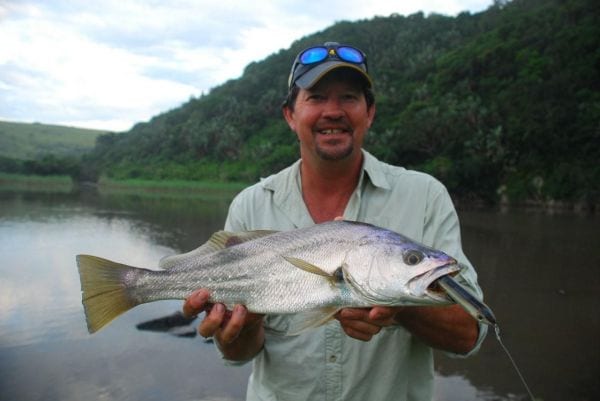
There is nothing quite like having a large kob sip a lure off the water’s surface, then making a big boil in the water as it feels the hooks bite and start running for the channel.
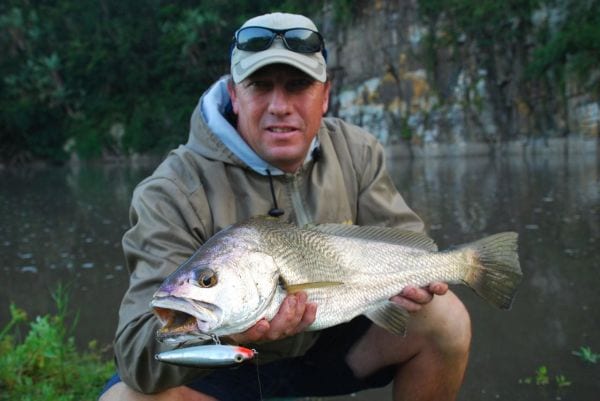
It is worthwhile travelling as far up these rivers as you can go with a boat, even if it means getting out and hauling the boat over rocky beds in order to reach pools higher up. In many cases some of the best fishing is to be had in these upper reaches of the rivers. There is also the added advantage that there is a layer of muddy fresh water on the surface, with clean salt water below. This restricts the fish from seeing out of the water and means that you can approach without being detected.
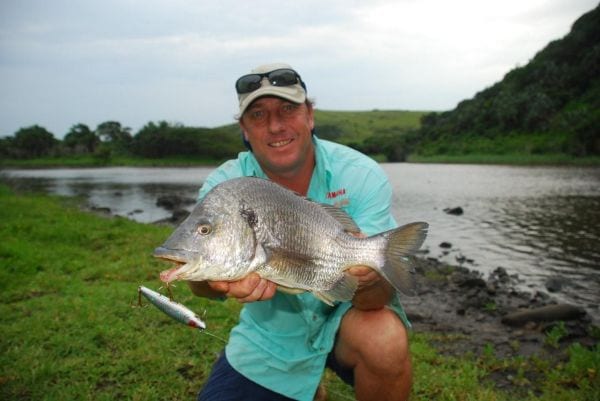
The upper reaches of the estuary are good areas to target perch and river snapper in particular. Both species are very susceptible to slowly worked surface lures. These fish are normally found amongst structure that makes any other form of fishing for them very difficult, as you snag up continuously with sinking lures. They seem to be particularly attracted to rocky beds, especially areas that are largely exposed on the low tide, with oysters and barnacles growing on the rocks. These fish are often best targeted when the tide begins to drop and the tops of some of the rocks become exposed in the areas that they inhabit. They are very resident and will be caught in the same places time after time. It is important not to over pressure a favourite spot though, or the fish will stop feeding there. Rather give each area a rest and try some other spots to keep all your areas productive.
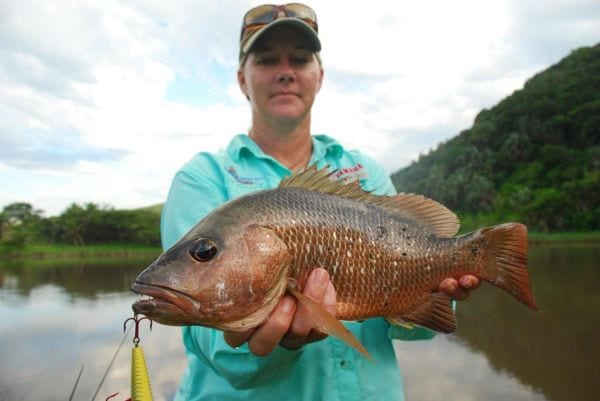
Other good structure to look out for is rock ledges dropping into the water and overhanging vegetation. Many of these species like the cover provided by shade and deeper water amongst the rocks. They will hole up there during the day while not actively feeding, but can be enticed to strike a well presented lure that is worked above them. Surface lures can be used throughout the day to target species such as perch and river snapper, with well aimed casts that get right into the structure.
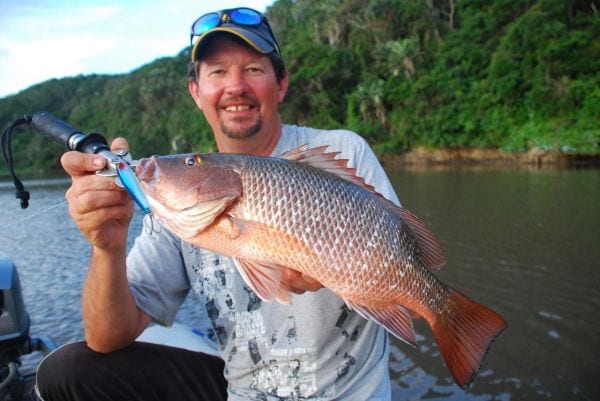
Some of these pools in the upper reaches will also hold decent sized kingfish and surprisingly large kob. Even though it will seem that they have to swim on their sides to access this water. It is worth exploring every single nook and cranny in these Transkei estuaries and you will be surprised at what you can catch in the most unlikely looking places. After doing this for a while you will be able to quickly recognise areas that should hold fish, and will be able to concentrate your efforts on the more productive areas.
A few of my favourite lures for this type of fishing are small cup faced poppers, such as 5cm Rapala skitter Pops and 6cm Storm Rattlin’ Chug Bugs. I change the hooks on these to stronger, salt resistant trebles. The reason that I do not change the hooks to singles is that with this kind of fishing the fish often strike in a wild, aggressive manner, often missing completely, and the hook up rate with singles would be too low. I find that colour is generally not a huge issue, particularly if the water is murky, but at times the fish can be selective so it is worth carrying a range of colours. These small poppers need to be fished with a slow twitching action, with pauses between twitches. The strike often comes on the pause, or just as you start to twitch the lure after letting it lie still.
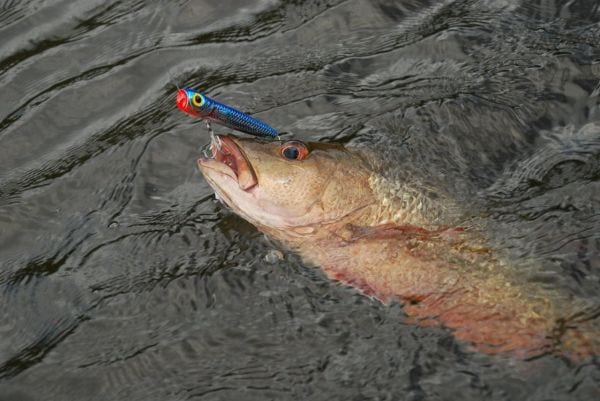
The next lure that is important is a range of surface sliders that can be fished with a slow zig-zagging “walk the dog” action. The 9cm and 11cm Rapala X-Rap Walk lures are excellent and have loud rattles. It is also good to have some small sliders without rattles such as a Zara Puppy or a Bagley’s finger mullet. These lures should be cast beyond where you think the fish are and then worked towards and over them in a subtle zig-zagging action, imparted by twitching the rod tip. If the action is smooth and the lure looks like a swimming snake from where you are standing, it will attract some vicious strikes.
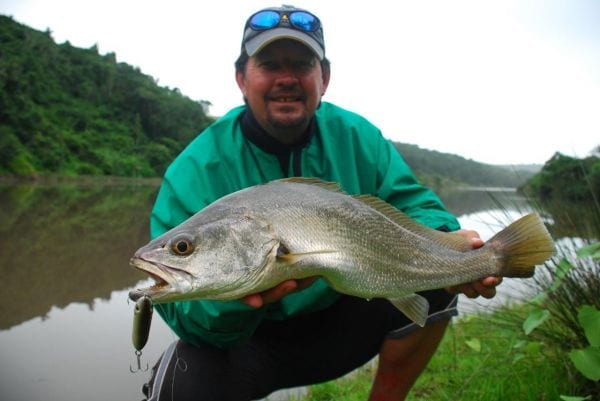
The other lure that I do not ever leave out of my tackle box when fishing estuaries is a mirrOlure 7m. This lure is almost impossible to find in shops in South Africa, and may need to be bought from an online tackle store. It is a very unique lure which is known as a floating twitchbait. It floats at rest and when given a pull does a shallow dive where it does a small wobble at the end throwing a flash, before floating slowly up to the surface. It is worked very slowly around likely looking structure and almost never fails to attract a strike from even the most wily predator.
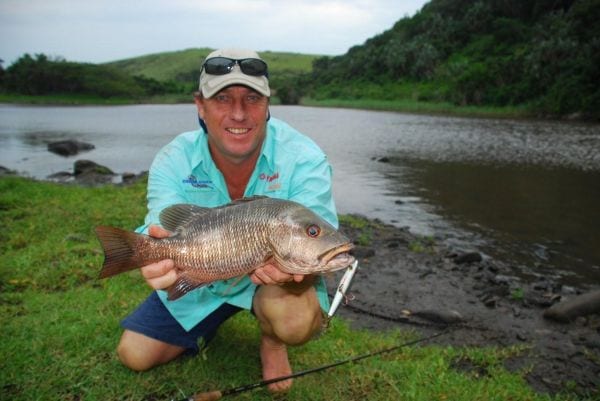
Although not traditionally a surface lure, a Rapala Shallow Shad Rap can also be fished on the top. If it is cast in and allowed to float for a few seconds, then given a small twitch, just to get it to dive a few centimetres, then allowed to float up again. This action is very much like a wounded baitfish and draws some incredibly aggressive strikes. I enjoy using these lures in this way and find them deadly for fish that hold tight o structure such as perch and river snapper.
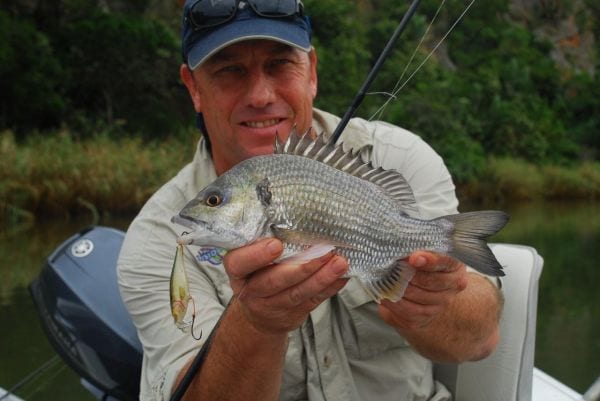
I fish my surface lures in the estuaries with one of two outfits. A light, fast action rod, and matching reel with 15lb Sufix performance braid and a two to three metre 20lb hard fluorocarbon leader such as Double X. The reason for the fairly strong braid and very hard leader is that most of the fish hooked in the structure where you are fishing your surface lures will attempt to cut you off on rocks, oyster shells and barnacles and will succeed if you do not hold them out, or have a very abrasion resistant leader. The other outfit is a carbon copy of the above but with 8lb braid and a 15lb fluorocarbon leader. This is specifically for casting the small, very light lures when the bite is slow.
Many of these fish that we are targeting are resident in the river systems at least for part of their lives. Any one of them removed from the water is one less fish for you to catch on your next trip. I strongly recommend releasing all fish caught in our estuary systems, that way we will all enjoy the fishing in these fine rivers for years to come.
- Maldives Trigger - April 28, 2022
- Matoya Humpback – Figuring it out - December 15, 2021
- Mixing It Up - November 24, 2021