


Tigerfish are Africa’s own freshwater game fish, they occur nowhere else in the world. There are five species of tigerfish on the African continent, of which three are considered to be prime angling species. The best known of these is Hydrocynus vitatus, the species that is caught in the Zambezi and Okavango river systems and southwards. Goliath tigers which occur in the Congo river are another and then Hydrocynus tanzaniae, the Tanzania tigerfish is the third. This third species was only discovered in 1986, and has a small distribution, being found in the Kilombero and Rufiji river systems in Tanzania.
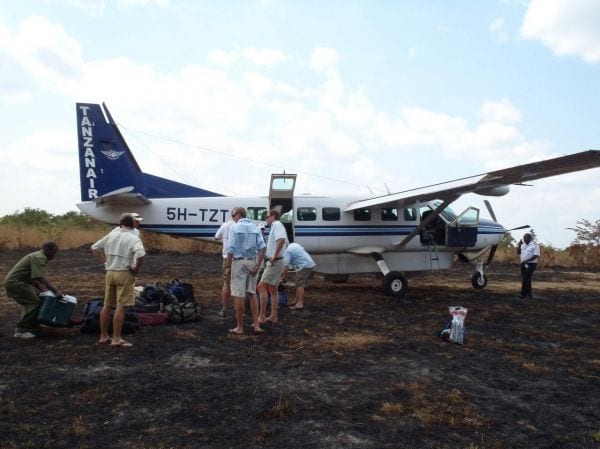
Above: The Kilombero North Safari concession is extremely remote and is only accessible by charter flight from Dar Es Salaam.
What makes the Tanzanian tigerfish exciting as an angling species is that it grows to large sizes, frequently attaining weights of over twenty pounds. While Goliath tigers do get substantially bigger they are few and far between and this makes them difficult to catch. Tanzanian tigerfish on the other hand are plentiful in some of the waters where they occur and these big specimens are caught regularly.
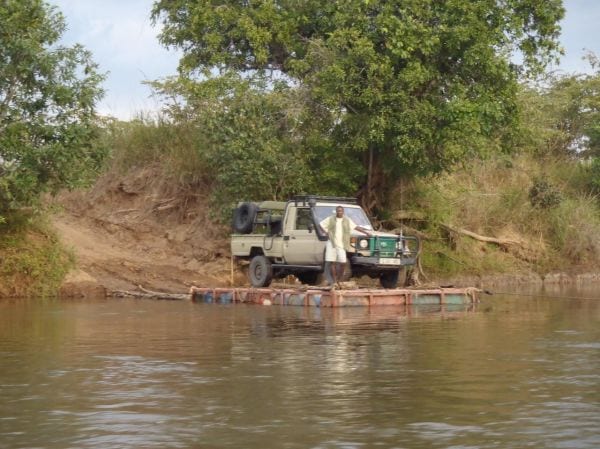
The Kilombero North Safaris hunting concession in Southern central Tanzania is the best area to target this incredible fighting fish. The concession has more than sixty kilometres of exclusive rivers which is carefully managed by the Tourrettes guides and is home to some of the biggest tigers available to anglers. There are no locals fishing these waters, so the fish stocks are truly excellent. Fishing is limited to four rods per week for a limited period of each year and the beats which are fished are rotated so that no one particular area gets excess fishing pressure.
Up until three years ago a twenty pound tiger had never been landed on fly. Since the discovery of the Kilombero tiger population this record has been achieved many times over and twenty pound plus fish are being landed on fly during the season on a weekly basis.
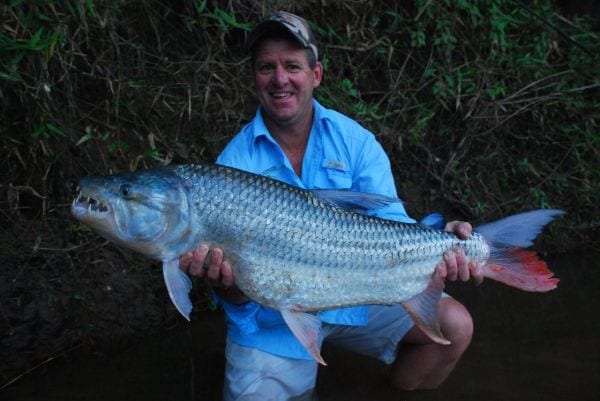
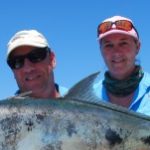
Joe Brownlee with a 20lb tiger caught right in front of his tent on the Mnyera river with a spoon on the morning we left.
Situated in some of the wildest and most inaccessible bush in Africa, the concession is two thirds of the size of the Kruger Park. It is accessed by aircraft, a flight of an hour and forty minutes from Dar Es Salaam. The camps in the concession are set up for hunting, but they have a specific window between August and November each year when they are for the exclusive use of fishing groups. The two rivers in the concession, namely the Mnyera and Ruhudji rivers each have a camp on them and anglers get to fish on both during a week’s stay.
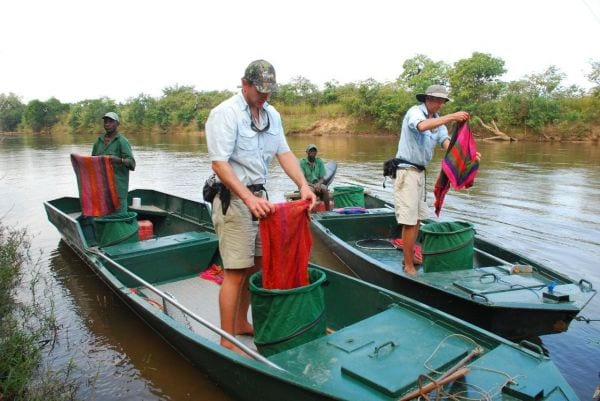
Tourrettes guides Rob Scott and Keith Clover preparing the boats for a morning session of flyfishing on the Mnyera river. These boys are organised!
This wilderness is home to all of Africa’s big game, and a variety of fantastic birdlife. Nights around the fire are filled with the sounds of lion roaring and hyena calling, while days on the water are often spent dodging hippo and keeping a wary eye on large crocodiles. The camps are fairly rustic hunting camps, but comfortable enough with all the facilities one could expect, including en-suite hot water showers, mosquito proof tents etc. Meals are taken in an open dining area on the river’s edge and are well prepared in a bush kitchen, using coals from a fire. Meat such as buffalo is normal fare and adds to the exotic experience.
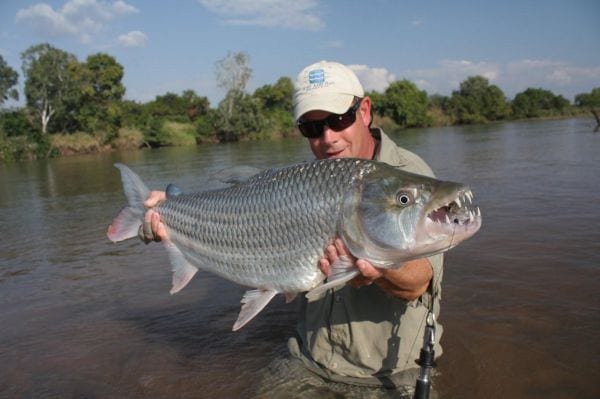
The fishing is fairly technical, with accurate casting being a big advantage. These tiger tend to hold quite tight to structure, so as you drift down the river you make casts into likely looking holding spots. The guides from Tourrettes who host and guide you are very good at pointing out where the fish should be and warn you about water depth and potential snags. The guides use poles to slow the drift down in likely spots, giving you more time to make casts, and are adept at retrieving flies cast into the bush on the sides of the river or from underwater snags. The guiding is world class and a their excellent contribution is a massive advantage in this remote area.
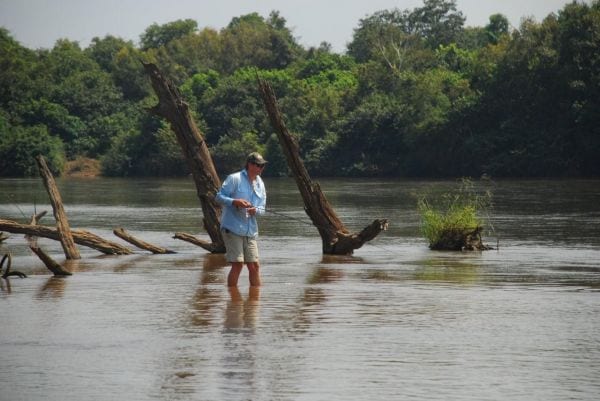
The tigers are big and aggressive. They hit the fly with typical tigerish ferocity and put up a spectacular fight with all the jumping and hard runs that are synonymous with the species. Fishing with barbless hooks in order to get a solid hookset in their hard bony jaws, the angler has to keep his wits about him and put maximum pressure on the fish, making sure never to give any slack whatsoever. The fish are netted at the boatside by the guides and if it is a trophy then they take you in to a shallow sandbank to photograph your catch and prepare it for the release. A lot of care is taken with the fish and it is heartening to see how seriously the guides take the welfare of their quarry.
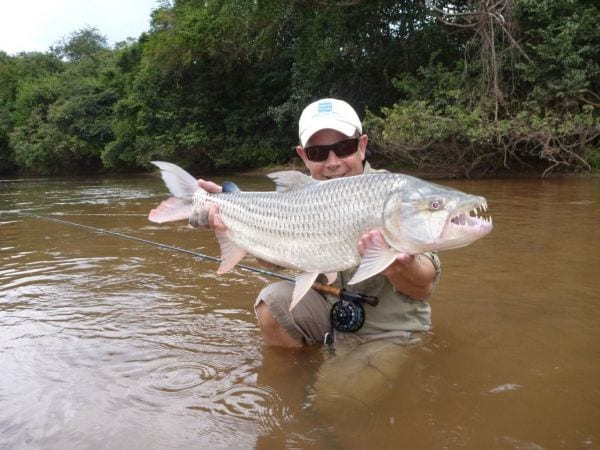
A trip to this remote corner of Africa in search of these beasts of the fishing world is a must to any angler that can afford it. It is an experience of a lifetime and a privilege to be in a place where there is not so much as a plastic bag or bit of litter lining the river banks. Where the fishing is as it was when the world began and where you feel so close to nature that you can taste it.
- Maldives Trigger - April 28, 2022
- Matoya Humpback – Figuring it out - December 15, 2021
- Mixing It Up - November 24, 2021